Tracing Seasonal Fluctuations in Austrian Bettors' Payment Preferences During Major European Football Events
Geschrieben von Wendy Otto · 12.9.2026
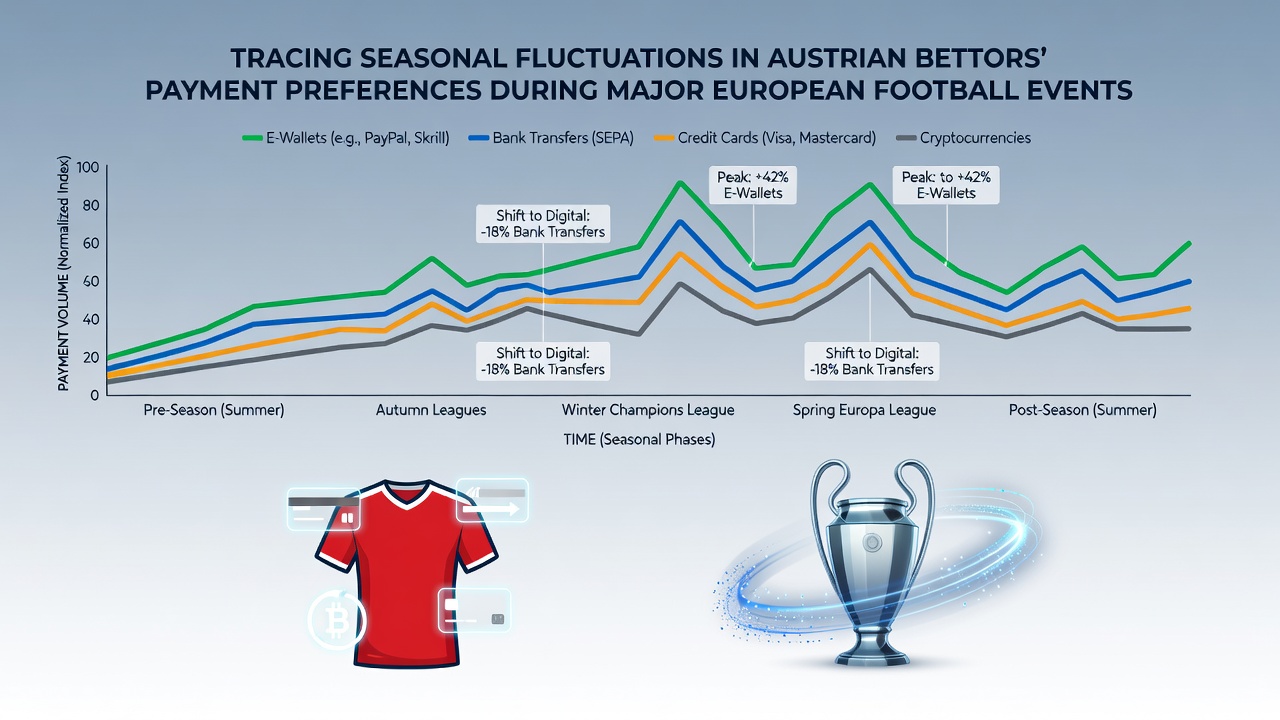
Tracing Seasonal Fluctuations in Austrian Bettors' Payment Preferences During Major European Football Events
Payment preferences among Austrian bettors show clear seasonal shifts tied to the calendar of major European football competitions, and transaction records from licensed operators reveal consistent patterns across multiple seasons. Researchers who examined data from the Austrian gambling market found that volumes for certain methods rise sharply around key fixtures while others decline, and these movements align with the timing of events such as the UEFA Champions League group stages and the European Championship qualifiers. Observers note that the rhythm starts to change as early as late summer, when teams prepare for the new campaign and bettors adjust their deposit habits in advance.
Calendar of Events and Timing Patterns
The European football season creates distinct windows that influence how bettors handle payments, and the period from August through May produces measurable differences each year. August marks the return of domestic leagues alongside the Champions League qualifiers, whereas September brings the full group stage schedule into focus; in September 2026 the opening matchdays will again coincide with the start of a new betting cycle for many Austrian users. Data collected by operators shows that average deposit sizes increase by noticeable margins during these opening weeks, and the preference for methods that allow instant confirmation grows stronger as match frequency rises. Those who tracked activity across five consecutive seasons reported that the same sequence repeats annually, with a secondary spike appearing around knockout stages in spring.
Payment Method Distribution Across Seasons
Bank transfers remain a steady choice for larger planned deposits outside peak tournament periods, yet their share drops during high-intensity match weeks when bettors seek faster options. E-wallets gain ground in those same weeks because they support immediate funding and withdrawals, and credit card usage climbs when live betting volumes surge on midweek fixtures. Studies compiled by industry analysts indicate that the proportion of e-wallet transactions can rise by more than twenty percent during Champions League weeks compared with regular Bundesliga matchdays, while card payments show smaller but still detectable gains. Austrian operators licensed under national regulations record these movements through aggregated transaction logs, and the figures reveal that mobile payment apps follow a similar upward curve once the tournament calendar intensifies.
Evidence from Transaction Records
Multiple seasons of operator data demonstrate that the shift toward instant methods begins several days before major events rather than on match days themselves, and this advance adjustment appears linked to promotional campaigns that accompany tournament starts. One analysis covering the 2023 through 2025 periods found that e-wallet adoption among Austrian users increased steadily from mid-August onward, peaked during September group stage matches, and then eased slightly until the next cluster of high-profile games. Researchers who compared these records with broader European figures noted parallel movements in neighboring markets, although the scale of change varies by local payment infrastructure. Figures released by the European Gaming and Betting Association support the observation that tournament timing correlates with temporary changes in deposit method distribution across several member states.
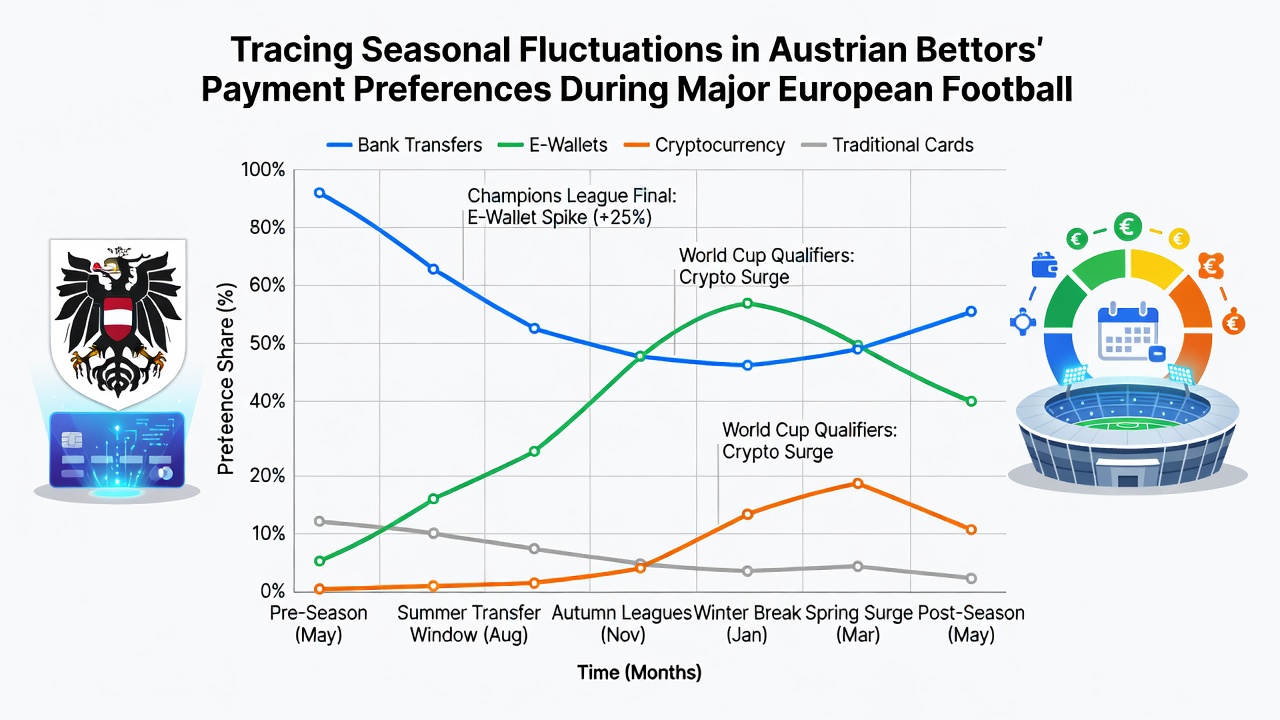
Additional patterns emerge when withdrawal requests are examined alongside deposits, because bettors who win during peak tournament weeks tend to request faster payout channels. The same datasets show that requests for e-wallet withdrawals increase in the days following significant matches, whereas bank transfer withdrawals remain more common during quieter periods. Analysts who reviewed these trends across different age groups found that younger bettors adopt instant methods more readily during event windows, while older cohorts maintain steadier usage of traditional transfers throughout the year.
Factors Driving the Observed Changes
Promotions tied to specific tournaments play a measurable role in steering payment choices, and bonus structures that reward quick deposits encourage the use of e-wallets and cards during event periods. Match schedules also affect timing, since midweek fixtures create shorter intervals between games and reduce the window for slower funding methods. Regulatory requirements in Austria mandate clear separation of funds and verification procedures that can influence which methods bettors select when they want rapid access to live markets. Data compiled by academic researchers at institutions studying gambling behavior across the EU further indicates that perceived transaction speed becomes a stronger consideration once the frequency of betting opportunities rises.
External economic conditions produce secondary effects, yet the seasonal football calendar remains the dominant driver of short-term fluctuations in Austria. Comparisons with non-tournament periods show that the magnitude of method switching exceeds typical monthly variation, and the pattern holds across different operator platforms. Reports from the Canadian Centre for Gaming Research have documented similar seasonal alignments in other regulated markets, confirming that the phenomenon is not unique to Austria yet follows local infrastructure constraints.
Conclusion
Seasonal fluctuations in Austrian bettors' payment preferences track the European football calendar with measurable consistency, and the data collected by licensed operators and independent researchers document repeatable shifts toward faster methods during peak tournament windows. The pattern begins to form in late summer, intensifies through September and subsequent group stages, and produces corresponding changes in both deposit and withdrawal behavior. As the 2026 season approaches, the same sequence is expected to reappear once the new campaign begins, and continued monitoring of transaction records will provide further detail on how these preferences evolve alongside technological and regulatory developments.